Washer Not Spinning? Common Causes and Fixes That Work
A washer that won’t spin leaves clothes soaked. Here are the most common causes, quick checks you can do, and when to call a pro.
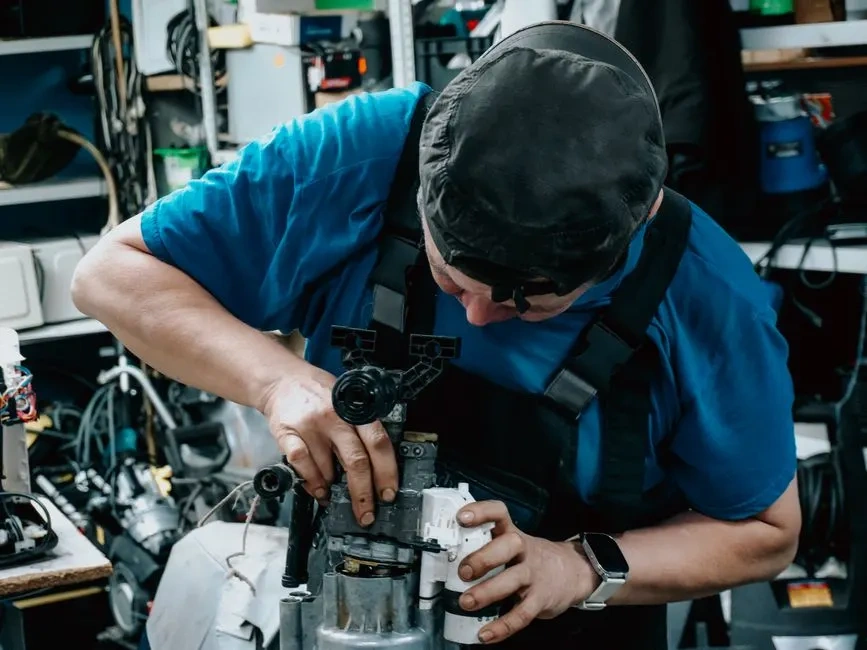
A washer that won't spin is almost always caused by an unbalanced load, a broken lid switch or door lock, a worn drive belt, a faulty drain pump, or a control board that never sends the spin command. In most homes, the fix is a same-day repair rather than a new machine. This guide walks you through the likely culprits, what you can safely check yourself, and when it's time to call a technician.
Why your washer won't spin (and what to check first)
Washer not spinning common causes start with the simplest explanation: the load is off balance. Front-load machines in particular will abort the spin cycle if clothes clump on one side of the drum. Before you do anything else, open the door, redistribute the load, and run a rinse-and-spin cycle. If the drum spins freely by hand and the machine still won't spin, the problem is mechanical or electrical.
Next, check the lid or door lock. Top-loaders have a lid switch that cuts power to the motor when the lid is up; front-loaders use an electronic door lock. If that switch fails, the washer fills and drains but never spins. You'll often hear the timer advance with no drum movement.
If those two checks don't solve it, the issue is likely inside the machine. That's when most homeowners call us for Washer Repair in California. We diagnose on the first visit and carry the common parts for Whirlpool, Samsung, LG, GE, and Maytag on the truck.
Common causes of a washer not spinning
Here are the failures we see most often across Los Angeles County, ranked by how frequently they show up on our service calls.
1. Unbalanced load or overloaded drum
An overloaded washer can't distribute weight evenly during the spin ramp-up. Modern machines sense the vibration and cut the spin to protect the bearings. Pull out half the load and try again. If it spins fine with a smaller load, you've found the cause - no repair needed.
2. Faulty lid switch or door lock assembly
The lid switch on a top-loader is a $15-$40 part, but a failed switch stops the spin entirely. On front-loaders, the door lock solenoid often fails after 5-7 years. You'll hear a click but the drum won't turn. Replacing the lock assembly is market repair of $150-$400, quote-based only, with a written quote before work starts.
3. Broken or slipping drive belt
Many top-load washers use a rubber drive belt to connect the motor to the transmission. Belts stretch, glaze, or snap. A snapped belt means the motor runs but the drum doesn't move at all. Belt replacement is market repair of $150-$400, quote-based only, with a written quote before work starts.
4. Worn drive coupler (direct-drive models)
Whirlpool and Kenmore direct-drive washers use a plastic coupler between the motor and transmission. It's designed to fail before the motor does. When it strips, the washer agitates weakly or not at all and won't spin. Couplers cost under $20; the labor is the bigger part of the bill.
5. Defective drain pump or clogged filter
If water won't drain, the spin cycle never starts. Most machines wait for a pressure switch to confirm the tub is empty. A clogged coin trap or a burned-out pump will stall the cycle. This is a common washing machine not draining California issue we fix daily.
6. Failed shift actuator or transmission
On newer top-loaders, a shift actuator moves the transmission between agitate and spin modes. When it fails, the washer may agitate but never spin, or vice versa. Actuator replacement is market repair of $150-$400, quote-based only, with a written quote before work starts. A full transmission replacement is a larger job, quoted individually before work starts - at that point, weigh the repair against a new machine.
7. Control board or wiring fault
The main control board sends voltage to the motor and shift actuator. A burned relay or corroded connector can stop the spin command. Diagnosis requires a multimeter and a wiring diagram. Board replacement is a larger job, quoted individually before work starts.
Quick troubleshooting you can do yourself
Before you call for a repair, run through these steps. They take about 15 minutes and cost nothing.
- Redistribute the load. Open the door, untangle clothes, and close it firmly.
- Check the lid or door. Make sure nothing blocks the latch. On top-loaders, press down on the lid to test the switch.
- Confirm the drain. If water stands in the drum after the cycle, the pump or filter is clogged. That alone will stop the spin.
- Inspect the belt. Unplug the machine, remove the rear panel, and look for a snapped or glazed belt.
- Test the breaker. A tripped breaker or a loose outlet can cut power mid-cycle. Reset and retry.
- Run a test cycle. Many modern washers have a diagnostic mode. Check your manual for the button sequence.
If the washer still won't spin after these checks, the fault is internal. Don't keep running cycles - a slipping belt or failing coupler can damage the transmission and turn a small repair into a much costlier one.
When to call a professional
Call a technician when the drum won't turn by hand, when you smell burning rubber, when the machine trips the breaker, or when you've replaced the obvious parts and the spin still fails. Those symptoms point to motor, transmission, or control board issues that need proper diagnostic tools.
We handle washing machine not spinning California calls every day, from Sherman Oaks to San Pedro. Our technicians arrive with the parts to fix many spin problems on the first visit. If you're in the San Fernando Valley, we also cover Washer Repair in Chatsworth and surrounding neighborhoods with same-day visits, confirmed on the call.
One more thing: if your washer shakes violently during the spin, the problem may be the suspension rods rather than the spin system itself. We fix that too - see our washing machine shaking California service page for details.
What to watch out for (common mistakes)
Homeowners sometimes make a spin problem worse by doing the wrong thing first. Here's what to avoid.
- Forcing a spin cycle on an unbalanced load. Repeatedly restarting the machine stresses the bearings and can crack the outer tub.
- Ignoring a slow drain. A partially clogged pump strains the motor and often leads to a full pump failure within weeks.
- Replacing the control board before testing the lid switch. The switch is a $20 part; the board costs far more. Diagnose in order.
- Overloading the drum. Consistently filling past the recommended line shortens the life of the suspension rods and coupler.
- Using too much detergent. Excess suds trigger a suds-lock error that halts the spin. Use HE detergent and measure it.
The most common reasons are an unbalanced load, a failed lid switch or door lock, a broken drive belt, a clogged drain pump, or a faulty control board. Start by redistributing the load and checking the door latch. If the drum won't turn by hand, it's an internal fault.
First, rebalance the load and test the lid switch. If those are fine, check the drain for clogs and inspect the drive belt. Most DIY fixes stop there. Internal failures like a bad coupler or transmission need a technician with a multimeter and the right parts.
A washer stops spinning when the control board doesn't receive a signal that the tub is empty, the lid is locked, or the load is balanced. Mechanical causes include a snapped belt, a stripped coupler, a worn shift actuator, or a failing transmission. Age is a factor - machines over 10 years old fail more often.
Yes, in most cases. Belt, coupler, lid switch, and drain pump replacements are straightforward and are market repair of $150-$400, quote-based only, with a written quote before work starts. Transmission or control board failures are larger jobs, quoted individually before work starts. If the repair exceeds half the price of a new machine, replacement may make more sense.
A front-loader that drains but won't spin usually has a failed door lock assembly or a worn drive belt. The drain pump works independently of the spin circuit. If the door lock doesn't engage, the control board blocks the spin to prevent water from escaping.